Wednesday, 21 March 2012

Lately I have been...taking a lot of pictures

of Elephant and Castle
of Hackney Marshes
of Hackney Wick
of Newcastle
of Sunderland
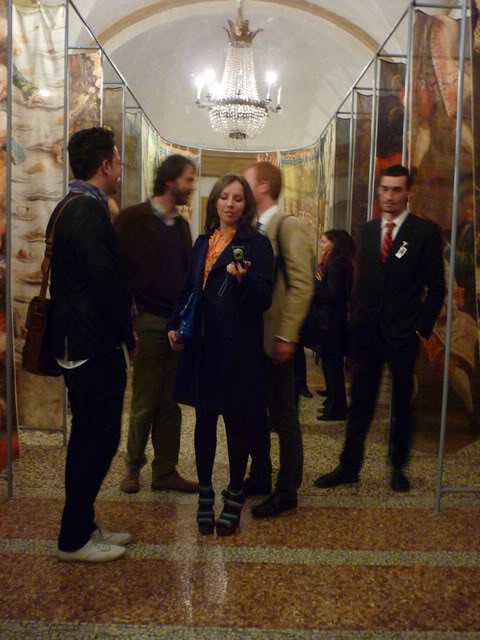
of art!
of Walthamstow
of the City

Good times.

Photobucket

Photobucket

Photobucket

Photobucket

Photobucket

Photobucket


Photobucket

Photobucket

Photobucket

Photobucket

Photobucket

Photobucket

Photobucket

Photobucket

Photobucket

Photobucket

Photobucket

Photobucket

Photobucket

Photobucket

Photobucket

Photobucket

Photobucket

Photobucket

Photobucket

Photobucket

Photobucket

Monday, 12 March 2012

Campaign for the Rehabilitation of No-Nonsense Plain Speaking in Art Gallery Press Releases

Few things make me happier than the launch of a new art gallery in London. If the gallery happens to be run by go-getting young artists or curators, all the better. I want them to do well; I'm rooting for them, I really am. But Jesus Christ on a Bicycle, do yourselves a favour and take a three day break between the writing of and the emailing of your breathy press releases.

I wouldn't normally pull on the razor-blade nail edges for a newbie gallery run by youngsters, but Peter Templeton ain't a newbie and really ought to know better than to send out a press release about his newest endeavour, the Red House Yonder, that somehow manages to take a lot of things I believe in - artistic excellence, art for everyone, the integration of social activities into gallery spaces, collectivity and community - and comes out sounding like a trumped-up convolution desperate for attention from the art-world's big hitters. I mean, come on! When the first sentence of your PR shtick is "Like Charles Saatchi they feel a lot of today's art has moved away from its true essence, from being something emotive and instead is often appreciated simply for the status it carries" something is so really very wrong. What! Charles Saatchi? Feels today's art has moved away from its true essence? Really?
The press release says that Red House Yonder fervently believes in the notion of art for everyone before Templeton effectively follows that up by saying that the real art will be made as one offs for the actual collectors, while some crappy digital prints will comprise the affordable offerings for the "art lover on a more limited budget."

Templeton also reminisces about his prior artistic "public outreach" project, the Salon des Arts, held at "the prestigious Palace Gate address in Kensington". Templeton feels it's important that the Red House "challenges the prevailing obsession with celebrity and sensationalism" by replicating the "interesting, provocative, and fun" events held at the Salon which included the likes of artists John Hoyland, Patrick Caulfield, architect Willy Allsop [sic], critics Mel Gooding. Aaaaarrrrrrrgggggggghhhhhhh! Even if Templeton really does believe in some of the things he spouts off about in the press release, the whole thing is so totally contradictory that it's impossible to tell whether Templeton is genuine or totally full of shit.

Anyway, decide for yourself. Read it in full below.

And to all you gallerists out there, please think twice before sending out your press release. Get a friend to read it, hell, get your mother to read it. If she doesn't understand it, there's no hope for the rest of us.

***

A new art collective has just launched in London, called Red House Yonder. Founded by a group of international artists including St Ives artist and RA member Liz Hough, Spaniard Gabriel Granados, emerging young artist Samuel Bassett, deceased Tony Smith and London artist and collective founder Peter Templeton.

Like Charles Saatchi they feel a lot of today's art has moved away from its true essence, from being something emotive and instead is often appreciated simply for the status it carries. They are keen to create art that "talks to the senses not sensationalism", art that tells the artists' story and is loved for what it is not just because it is a status symbol or brand.

“It’s time to move on from the notion of the art gallery and the collectors having this elite status. Yeah, we should be doing work for the collectors, because we also need to be represented in the art world and as a strong voice But it is about the larger world. We live in a very uncertain but exciting time. A phoenix, it is the time for a new kind of order to arise. This is a microcosm of that. It is about sharing, not about being anal and possessive about your own commodity in this case art. But wanting to work together to do things that are considered worthwhile. To me it is an enduring kind of art.” Said founder Peter Templeton

Peter explains that “The name came from an old blues song: I love the lyric “there’s a red house over yonder, that’s where my baby lies”. For me it was like going into a wood when you are little; you are a bit nervous or scared, but you know there is a house there or a place with lights and you want to go and find out what it is. That for me is the red house yonder. It’s a destiny, something you are drawn towards. To me there was the red house and the yonder.

The Red House Yonder project is an extension of the Salon des Artes, a creative space set up in the 90s by Peter Templeton with co-founder Danielle Dodd. Located at the prestigious Palace Gate address in Kensington, the Salon hosted social evenings, events, and exhibitions which included the likes of artists John Hoyland, Patrick Caulfied, architect Willy Allsop, critics Mel Gooding and thinkers like Charles Handy.

Peter explains: “The Salon was about generating social events which were interesting, provocative, fun and a place to chill out. People loved coming. It became a part of their weekly life and I have always fancied the idea of resurrecting the Salon but as part of a wider movement reflecting the digital age we now live in. One which, gives us the opportunity of producing original art at affordable prices. The Red House should also challenge the prevailing obsession with celebrity and sensationalism. Striving instead to create enduring Art which has something meaningful to say.”

“I have always been a believer in the collective and in community rather than just art as a sole pursuit so I wanted to do something which involved other artists. Working individually can be very isolated. I like the idea of sharing and working with other people; the excitement of invention, exploring the unknown, taking on challenges, having fun. A playful adventure in fact!”

Affordability of art is also central to the Red House thinking. The Red House will produce one-off pieces for their serious collectors, original customised digital prints and affordable print editions for the art lover on a more limited budget

Peter Templeton: “Affordable art can be achieved by looking at how things are done in the other creative domains like music, publishing or fashion. For example in the fashion world, there are different levels, from designer haute couture to High Street. All thoughtful and creative in their own right. Although haute couture, like the one off original piece of art, can be exclusive and expensive, a level also exists that is accessible to everyone which is still special, valid and a symbol of the artists and the originality of their work."

Moving into the present world has seen the creation of the Red House Yonder as a virtual collaboration, online and via a blog in which artists can share and engage, producing digital work and prints (The website will go live on 8th March 2012)

What better way to celebrate their launch than a party? It is happening on 25th April at 20th Century Theatre in Notting Hill from 6.30 - 9pm and they'd love for you to come.

“We see it less as an exhibition and more as event, as the art will be displayed in a more organic way than you might find in a traditional gallery. Our aim is to make art more accessible, fun and engaging and we believe this begins with how it is viewed in public. There is general perception that Galleries are intimidating and unwelcoming places to enter. Where you are expected to tip toe around in reverential silence. We have asked the question why is this case and isn’t there a more user friendly way of viewing and appreciating Art? Art is not appreciated in this way at home, so why does it have to be in the public sphere?” Peter Templeton commented. “It will be an evening of creativity, not just static art. A journey which we invite you all to join. We have a lot of surprises planned.”

Friday, 9 March 2012

Bodies Electric: NDT2 at Sadler's Wells


Great expectations are a curse. 

I seem to somehow unthinkingly operate under the assumption that everything will be fantastic; that everyone is a genius; that this is going to be amazing. It hardly needs said that this isn't a unique quality - I'm sure everyone has their own peculiar set of assumptions - so I don't understand how it always feels like news to me when these assumptions are regularly shattered. Yet, instead of learning from shattered assumptions, I always manage to twist round like a falling cat to land back on my own status quo of high expectations. I'm pretty sure a GP would diagnose psychosis. 
 
Apart from the mental gymnastics of the roller-coaster of high hopes and disappointment, I suspect I find an enormous amount of pleasure in the surprise of something actually being incredible. It doesn't matter if my default state is to assume incredibleness; if the thing turns out to actually be incredible, the delight of the incredible translates into a wonderful surprise, usually accompanied by a deliciously physical response.

I went to see one of my most favourite dance companies last night at Sadler's Wells, the junior company of the Nederlands Dans Theatre. They're the kind of company that validates having high expectations. I know they are going to be amazing, and so they are. The only problem is that I simply don't have the vocabulary to describe what it is that they do. How to describe something beyond description? I'm definitely at risk of being hyperbolic, but I don't care. I see so much opera, theatre, ballet, art, stuff, stuff, stuff and it's probably only once a year that I see something or experience something that makes me feel electric. There's something about watching these dancers that makes you realise what it means to have a body, what it means to move. Not to move gracefully or in ways that push the body to its limits of endurance or flexibility, but to know what movement is to the body and to know how - in an almost primal way - to move in space. When you watch them move, it often happens that it stops looking like dancing and looks only like bodies releasing in space. It looks like making the body free.

It's also nice to see NDT move on a bit beyond Jiri Kylián, whose Gods and Dogs piece came out, surprisingly, as the weak link in a perfectly pitched programme. Young Swedish choreographer Alexander Ekman's Cacti piece was hilarious, poking fun at contemporary choreography's tendency to ooze significance and meaning through oblique staging and bizarre movements - in parts, it reminded me of the brilliant Bongo Bongo Nageela-section of William Forsythe's Impressing the Czar. Ekman's genius is that he's been able to do what do many artists try and fail to accomplish: a synthesis of all that's come before into something new and fresh yet still intelligible, no matter how strange. It's not often that you see a string quartet and cacti share the stage with 16 dancers, let alone that it works so wonderfully well.

Also, how amazing does Philip Glass' String Quartet No. 5 sound in this piece?


Photobucket

Photobucket

Tuesday, 14 February 2012

A City Divided

Photobucket

I'm crap at vices. I don't smoke, rarely drink to excess, not a sex addict. My addictions are far more esoteric, often laughable: Ladurée macaroons, opera,  magazines and horses. Magazines are the worst. I could go for weeks without macaroons, but hardly a day passes when I haven't made a stealth trip to one of my favourite shops to surreptitiously stock up on freshly-printed pages. I don't know why I keep buying magazines, since most of them depress me with their samey blandness or samey edginess. You'd think that so much sameyness would be enough to drive anyone away from magazines. You'd be wrong. I keep coming back for more.

Christmas often brings gifts of bad magazine subscriptions - I don't want one issue of Cosmo, let alone twelve - but not this year. This past Christmas, my very clever soon-to-be husband, realised that the best he could do to rein in my magazine habit was to feed it with quality in the hope that at least the quantities piling up in our house would subside. That didn't happen, of course, but I've been absolutely delighted with my Stack Magazines gift subscription.

Every month Stack sends me a parcel of treats, usually a new issue of an independent magazine along with a little pamphlet or newspaper. I was a bit worried initially that, because I was familiar with so many of the mags on the site, there wouldn't be anything new to me but I was totally wrong about that and it's been one revelation after another. Since it's only February I've only had two Stack packages, but both were awesome: Boat came in the first package (Boat are a design agency who up sticks every six months to a new city where they write a cool magazine entirely themed around that place, so far: Sarajevo, Detroit and now London - I'm writing a piece about London's markets for this issue!) and DOR (an English-language version of a journal of Romanian nonfiction) in the second. 

But the best thing I've been sent by Stack thus far has to be Cairo Divided. I don't know that many consumers who complain about the demise of long-form journalism, but I certainly know a lot of journalists who do. One of the things I love about newspapers and magazines is that, at their platonic best, they provide a far better format for longer, more in-depth pieces than the no-attention-span web typically allows for, without being forced to succumb to the objective, academic demands of nonfiction books.

The beauty of Cairo Divided - a two-year collaborative project between photographer Jason Larkin and writer Jack Shenker - is that, being a newspaper of only one story, the piece has space to breathe. Instead of finding itself wrapped in endless 500-word news blurbs and photoshopped snaps of B-list celebrities, this fascinating story of Cairo's sprawl into new and improved 'satellite cities' is allowed to be important, by virtue of being the only thing in the mag to read. This text-heavy image-heavy approach certainly wouldn't work for every subject, but it's an excellent fit for the story of Cairo's changing approach to urban planning against the backdrop of national revolution. The perfect story, perfectly written and documented in the perfect format - this is magazine making at its best.

You can get your hands on a free copy of Cairo Divided here - just pay the cost of postage.

Photobucket

Photobucket

Photobucket

Photobucket

Photobucket

Photobucket

Photobucket

Except top image, all images copyright Jason Larkin.

Wednesday, 1 February 2012

a week in pictures

Playing catch up with pictures. 

Reminds me that I really ought to fix my camera and stop taking snaps on my phone.

Captions.
1. Mag shopping spree at the ICA
2. I'd have left it on the train too
3. Tacita Dean installation in Tate Modern Turbine Hall
4. South London art adventures
5. The amazing (not all to my taste, but the guy is dedicated to his art) Kabin collection
6. Nee naw!
7. A Room for London
8. Casiokids!
9. ecoLogicStudio's H.O.R.T.U.S at the Architectural Association
10. Christina Mackie at Chisenhale
11. Mike+Ollie at Brockley Market
12. Federation Coffee in Brixton Village Market
13. Croydon riots fire burn down building bye bye
14. Don't feed the pigeons!
15. Croydon Minster, resting place of six Archbishops of Canterbury
16. Kingston's Ancient Market Hall
17. Swans in the Thames at Kingston

Photobucket

Photobucket

Photobucket

Photobucket

Photobucket

Photobucket

Photobucket

Photobucket

Photobucket

Photobucket

Photobucket

Photobucket

Photobucket

Photobucket

Photobucket

Photobucket

Photobucket

Thursday, 19 January 2012

Freethinking


A new year and already at least one half-hearted resolution - blog more - broken. Ooops. Luckily, 2012 also sees me back in the world of the fandangoeing freelancers, which is why I was hoping to start blogging regularly again, as  instead of having to go to the office I have more time to go to stuff. And going to stuff is what I like doing best.

On Tuesday I went to see a lot of stuff, stopping off first at Libby Sellers' lovely new(ish) gallery space on Berners Street. I really liked the previous exhibitions I'd seen that Libby had curated, usually during LDF, in unusual little spaces, so I was really rather pleased to hear she was opening a permanent space. The current show, Fortune, by Mark Braun, is pleasant enough but you can tell it was planned as a holiday-season stop gap. I'd already seen the pieces - a series of beautiful water carafes engraved with one of seven glaciers, seven lakes or seven rivers from across the globe - in Milan last year, so I left wishing I'd seen something more ambitious, but the first few shows at the new space looked intriguing and I'm sure there will be plenty more to come.

Since I was in the area, I popped in to Alison Jacques intending only to have a quick whizz around the Catherine Yass show (a transplant from the De La Waar) before heading elsewhere, but I was bizarrely captivated by Yass's film footage of the Royal Sovereign Lighthouse. It's a peculiar structure: a lighthouse that doesn't look like a lighthouse. A concrete oil platform or the Maunsell Sea Forts, maybe, but not a lighthouse. 
I used to think that it was enough for an artist to do little more than document and present unexplored places and spaces. The explorer in me was delighted to be shown an unknown place. But there are different ways of doing it. Yass's lighthouse and Raphaël Zarka's video essay on Gibellina Vecchia, a Scicilian modernist tomorrowland, are two examples of the less satisfying way. It's nothing more than a 'look what I found' photo or video. These kinds of works just sit there, like marionette puppets waiting for someone to breathe life into them. There is a more interesting way to approach the 'unknown place' kind of work - Stuart Whipps is a good example - which understands that it isn't enough to hold the viewers hand and take them to a new place; you have to tell them a story about it as well. 

The problem with a piece like Yass's video is that there's nothing to think about. There's only a pretty video to look at and when left with a video that doesn't ask you to think about it, I resort to thinking about other, totally unrelated, things. I'm not thinking about the art; I'm thinking about me.

I'm thinking, this is all very hypnotic, these waves. I'm thinking about what kind of flowers I want to have at my wedding. I'd quite like to have natural flowers. I don't want anything flown in from hot-house farms in the Netherlands. Would it be weird if we walked down the aisle together? Wouldn't it be nice if we left the tiny church's enormous doors open during the service. It would be nice to hear birdsong during the wedding. What a scary, unknowable place the sea is. Despite all of our modern technology, our GPS systems, when you get lost in a city neighbourhood it doesn't feel half as alone and terrifying and lost as when you get lost in the ocean. They must have just finished painting in this room. The chemical smell is overwhelming. What does it actually mean in the Schrödinger's cat book when Gribbin says that quantum mechanics says that nothing is real and that we can't say anything about what something is doing when we aren't looking at it? Then I think that it's funny that I'm thinking these things and now I'm thinking about thinking these things and I'll probably write about thinking these things on my blog tomorrow. I should write them down.

So I did write them down, which is why you've just read them. 

After all that, you might be thinking that I hated the video, but I didn't. In fact, I kind of liked it. I don't get very many opportunities to sit in a dark room and stare at pretty pictures and let my mind wander. I still think the piece is problematic, for all the reasons mentioned above, but I sat and I watched the video until it ended and I left the gallery feeling pretty jazzy.

Wednesday, 14 December 2011

Noises off

Photobucket
Noisy doors. Too true.

If you're still sweating over unfinished Christmas shopping, I always think that you can never go wrong with a Really Good Book. I keep trying to make Boccaccio's Decameron trendy so everyone buys (and reads!) it, thereby assuaging the last remnants of guilt I feel for never having read it at University when I was supposed to. I finally got round to it over the Christmas holidays a few years ago, and I'll probably preach the gospel of Boccaccio until I die. It's just brilliant. But, if you're looking for something a bit more contemporary, I started reading Hillel Schwartz's (the cover notes describe him as an “independent academic” - I don't know what that is, but I want to be one) new book on noise a few weeks ago; Making Noise: From Babel to the Big Bang & Beyond. A 900-page brick, it would be like gifting your significant other a new read and a weapon of limited destruction in one present. So far, I'm enjoying it immensely.

There are few types of books more satisfying to me than meticulously-researched, beautifully-written books about a single aspect of cultural history. There's also something very satisfying reading a book about a subject that has an undercurrent of interest to practically everyone I know. I mean, all Londoners loathe rouge noise. Hands up, how many of you have seriously considered wearing earplugs on the bus?

Indeed, just the other day on the tube, I sat next to a well-dressed gentleman, not wearing earplugs alas, but reading a newsletter for an organisation I'd never heard of: Pipedown. Pipedown campaigns for the elimination of piped music in retail spaces. I'm hardly surprised that such an organisation exists; if anything, I'm surprised that more people aren't aware of it and active members. As for Schwartz, well I don't know whether he has anything to say about the hell of omnipresent piped-in muzak; I haven't gotten that far in his book yet.

So, I'm reading this book about this history of noise as a social concept, and I'm thinking about earplugs on the bus and piped music in the shops, and I'm not quite sure how it happened, but all these thoughts led me not to noise or music or sound, but change. 

These are still rather muddled thoughts so bear with me, but I was thinking how peculiar it is that we love music when it's our own, we love raucous laughter when it's with our friends; when tunes are tinny and chirping through the headphones of someone on the bus or the laughter is exploding through the throats of kids in the cafe, we don't love it at all. We talk about and think about noise in relation to public and private spaces: noise in public, annoying, but necessarily unavoidable; noise in private spaces, an unforgivable crime.

The best thing about cultural historians like Schwartz is that they can remind us how much things have changed, and how much we take the meaning of concepts like public and private space or public and private actions (or noise!) for granted. There's a fascinating section in his book where Schwartz talks about how up until a few hundred years ago all classes of society lived their lives in full, noisy view of everyone else living theirs: private space was reserved for confession at church, and only then if one could afford it. Even when Schwartz speaks about the interesting shift that occurred in the 1600s when wealthy domestic houses started building separate service corridors so that servants could go about their business without having to be seen, he points out that many household activities still took place in full view of servants. Obviously these days most of us can't afford to keep grand houses with a brace of servants, but even if we could and did, the thought of having sex in the presence of one's lady's maid isn't particularly palatable to most people (I said to most people...).

I'm not entirely sure how I got from thinking about changing historical attitudes to noise, to how the idea of change more generally drives (or destroys) us culturally. Just to give an example, in my tenancy contract there's an explicit clause that forbids me from vacuuming after 11pm on a Sunday. You think I'm joking. Two hundred years ago this idea would have been met with incomprehension and disdain (not least because hoovers hadn't yet been invented!).

Someone somewhere has probably written a very elegant book about the cultural concept of change (if you know of one, let me know so I can add it to my Christmas reading list!), but it's kind of amazing that, as hyper-thinking beings, we manage to make any cultural progress at all. It's an incredibly tricky balancing act between feeling nostalgic for a probably misconceived golden age, pressure to situate one's works and thoughts in the greater 'canon' of born-this-way geniuses, and looking forward to see what changes can and should be made and how to enact such changes.

It's easy to see how this tightrope works itself out in an industry like technology – we didn't have mobile phones 15 years ago and now most people can't imagine how they'd live without one – but with art and literature, it's a bit more difficult to see the patterns of change until long after they've happened. This is why it's far easier to look back at the works of a group of Paris-based painters in the  19th century, clock the similarities and break out the Impressionist epithet, but far more difficult to look at current artistic output and make any sense of what's happening. That's probably partly thanks to the internet which has made the world feel as vast and unknowable as it is, despite what the monoblob international curators would have us believe ('making is, like, totally huge for 2012').

Cultural change is such a strange thing. How does it happen? How do we go from thinking that the advent of tunes in shops is a wonder to thinking that it's the most annoying thing ever to happen to the high street? How do we go from thinking that taking a piss is a performance fit for public view to thinking that weeing is for behind closed loo doors only? How did we shift from thinking of noise as an inescapable, though natural, part of city life to being intolerable of urban rogue noise, so much so that some studies have even claimed that white urban noise contributes to autism in children.

I'm not really sure how I got from thinking about noise in relation to changing cultural values to thinking about change in the contemporary art world. My hunch is that it's something to do with the impending new year, a taking stock sort of exercise. I'm about to finish my three-month stint at Icon, which means I'll be free to wreak havoc on the world (slash job market). I'm working on a few new top-secret projects, but I'm always looking for new projects to keep me busy. Thoughts of future job prospects are typically accompanied by thoughts on the states of my industries, and I find myself surrounded by industries in the middle of identity crises. As a writer and curator of art and architecture, I feel a bit like I couldn't be better placed, but also a bit like I couldn't be worst placed.

The reason I decided to start working in contemporary art was because I had finally had enough of looking everywhere around me and seeing only (mostly) absolute crap masquerading as show-boating conceptual art. I wanted to call emperor's new clothes on all this bullshit, especially since I didn't see anyone else saying anything that remotely resembled the truth (sticky concept, I know), but I also wanted to put my own theories into practice, I wanted to curate  my own shows and try to do things differently.

There's still a lot of bad art being produced by not unintelligent people, and a lot of bad exhibitions being produced by what ought to be good museums and galleries – I do wish this would go away. But, this year, I've also met a lot of curators staging thoughtful and beautiful exhibitions and a lot of artists producing interesting work. There's still much to be done, but when the National Gallery organises a show like Metamorphosis round about the same time that the National Portrait Gallery stages a show like Imagined Lives, while MA students at the Slade are actually making art not concepts, I feel like things are getting better.

I'm an optimist by nature; I prefer to cheer-lead rather than criticise, but the overwhelming sense of careerism and ambitiousness in the art world seems to have nurtured a desire to say what I actually think in the face of a never ending stream of descriptive mediocrity. I reserve the right to change my mind, or (even better) to be proved wrong by an intelligent counter argument. Alas, thus far, the best that most people seem able to come up with is: “who are you to say what's good and bad art?” Who am I indeed.